Step-by-step
Wood and lumber: your checklist
0 of 5 steps checked. Your checks reset when you leave this page.
Inventory by type and length
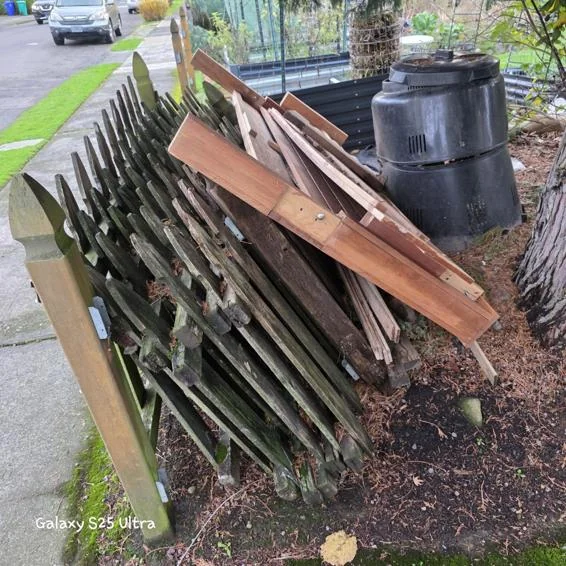
Record board counts, longest lengths, and whether the pile contains plywood, fencing, trim, or furniture parts. Note visible coatings and known treatment. Describe uncertainty instead of calling the entire pile clean wood.
Preserve potential donation material
Set aside sound boards that are already safely removed, and photograph their ends and surfaces. ReBuilding Center lists de-nailed dimensional lumber at least four feet long. Donation depends on condition, safety and available storage; moldy, rotten, pest-infested or creosote-treated wood is not suitable for that program. Ask for approval before cutting anything shorter or doing additional preparation solely for donation.
Separate clean wood from engineered material
Metro Central lists separated raw dimensional lumber, pallets and packing crates as clean wood. Remove wrapping, strapping, labels and hardware; nails are allowed. Its clean-wood category excludes painted, stained, varnished or treated pieces. Plywood, OSB, particleboard, laminated wood and paneling are charged as garbage there. A different facility can classify wood differently, so check the destination before combining materials.
Disclose the questionable pieces
Tell the receiver about rot, peeling finishes, attached hardware, unknown coatings, and mixed demolition debris. If suspect hazardous building material is involved, use a qualified professional and a separate approved destination. Do not sand, break, or strip uncertain material to change how it appears.
Plan access and the destination together
Share the access route and loading location when comparing options; long boards can be awkward in tight spaces. JunkPDX offers paid hauling for approved removed debris and a free onsite estimate. Confirm the material scope before combining piles.