JunkPDX local guide
Are Leftover Building Materials Junk?
Decide which leftover tiles, flooring planks and cabinet parts to save for repairs, what a Portland reuse store may take and what to list as debris.
By JunkPDX
Updated
Keep the pieces you can match to the house
A spare bathroom tile earns its shelf space when it matches the one you might need to replace. Before a remodel pile goes out, walk the house with one tile, plank or cabinet pull and find its match. A piece left over from a floor you’ve since replaced is easier to let go.
Label the keeper with the room and the product name or lot number from its box. Save a photo of the label if the carton is falling apart. When a new owner takes over, a box marked “downstairs bath, shower wall” is much more useful than a stack of anonymous white tiles.
- Tile or flooring. Keep intact pieces that match an installed surface, with the original label when you have it.
- Cabinet hardware. Bag a matching pull or hinge with its screws and note which cabinet it fits.
- Trim. Save a short piece with the full profile if you’ll need to match the shape later.
Is there enough for someone else to use?
Keep matching surplus together and count it before offering it. Three sealed cartons marked 18 square feet each add up to 54 square feet. That tells someone far more than a photo captioned “free tile.” Include the tile dimensions and a photo of the factory label.
Portland Region ReStores generally asks for at least 50 square feet of matching, never-installed tile in factory-sealed packaging. Staff may consider smaller amounts of mosaic, stone or subway tile. Confirm with the store before making a trip, especially if a box is open. A few intact loose tiles may be a better fit for a neighbor’s small repair.
What belongs on a debris estimate?
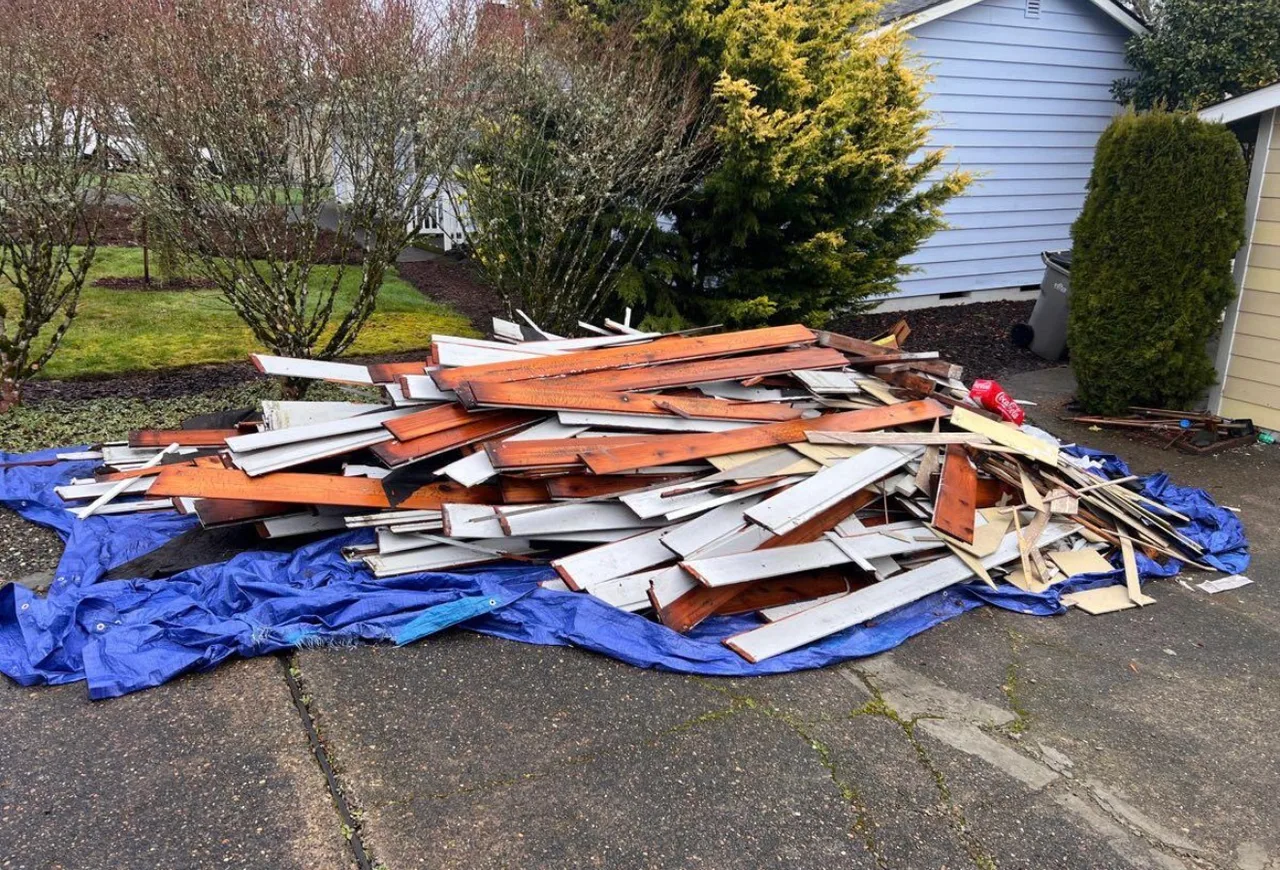
When the repair spares and reusable boxes are spoken for, describe what is left. A stack of loose flooring, three cabinet doors and a pile of broken tile are easier to quote separately than “one pile in the garage.” Count the boxes and flag tile or other heavy material even when it takes up little space.
If a contractor is still on the job, confirm who owns unopened supplies and who agreed to take away the tear-out. Ask about loose, already-removed material when you book a debris estimate. Point out anything still fastened to the building so the crew can review that work separately.