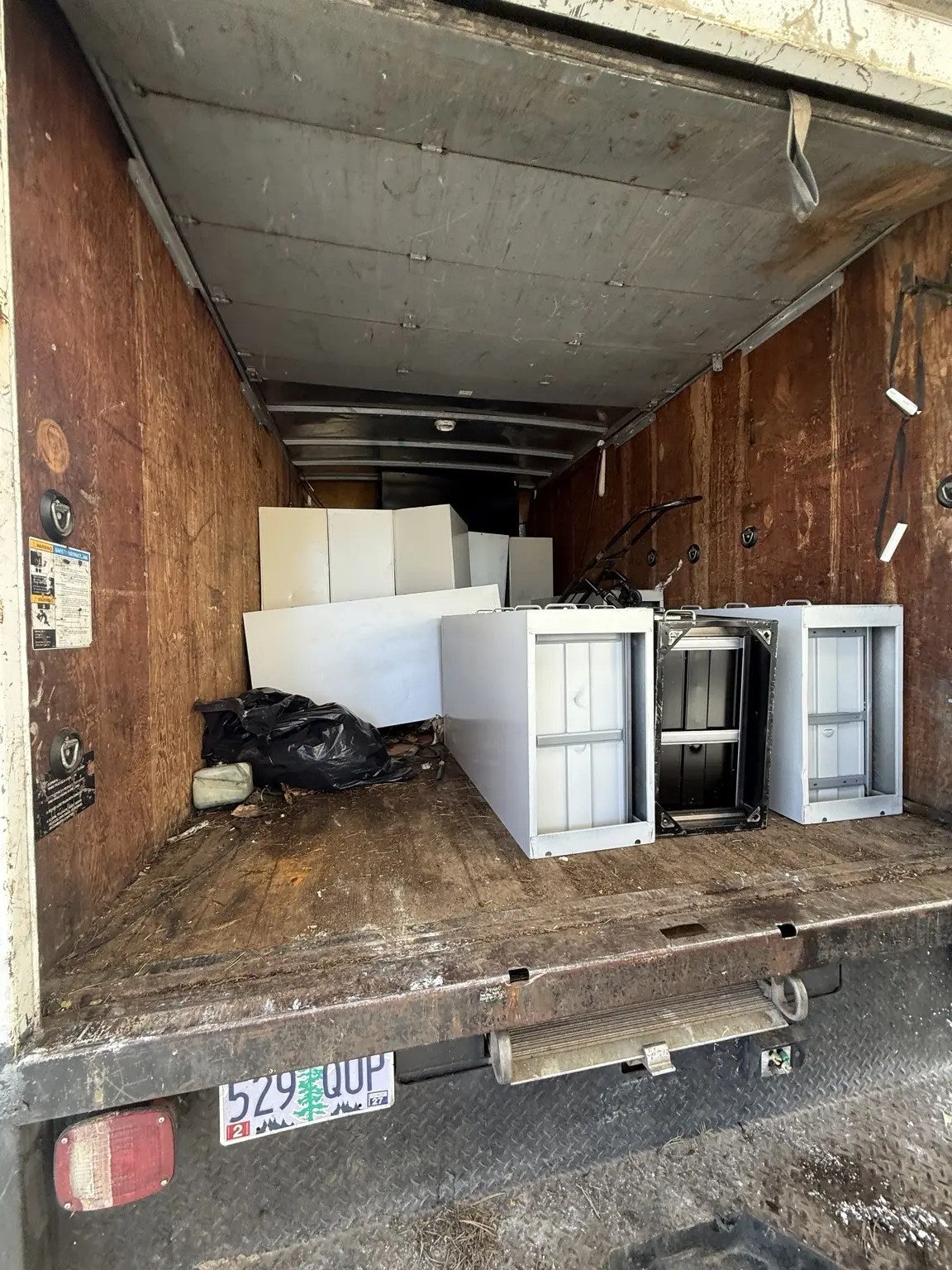
Separate the rack from the belongings on it
Count shelving units and connected sections, with approximate height, width and material. Identify loose shelf panels and parts that should leave. Mark tools, boxes and supplies you are keeping, and describe any contents that also need hauling. Do not assume the crew can discard a loaded shelf's contents just because the rack is unwanted.
Plan a defined garage cleanout
Show wall, floor and ceiling attachments
Photograph brackets, anchors and how the unit is fitted without releasing restraints. Say whether it is freestanding, wall-mounted, overhead or part of industrial racking. Attached components and large systems need individual assessment for detachment and handling. A loose-rack quote does not include removing building supports, extracting anchors or repairing walls, floors or ceilings.
Request fitted-rack or industrial shelving review
Keep the exit route visible
Show the garage doorway, clearance beside retained belongings and path to a possible loading spot. Note a narrow driveway, steps, uneven ground or long carry. Describe bent frames, unstable shelves and heavy panels. Leave unstable stacks undisturbed and explain what is obscured; you do not need to dismantle or carry the rack outside to request an estimate.
Clear one garage bay without emptying the whole garage
Choose the estimate that matches the actual rack
For loose household racks, request a standard estimate with any approved garage contents shown together. Fitted, overhead or industrial racking starts with project review before a removal appointment or dismantling plan is confirmed. Your onsite estimate is free; volume, weight, carrying, disassembly and disposal affect the quoted work. Approve the complete scope and price before removal begins.
Book an estimate for loose household racks