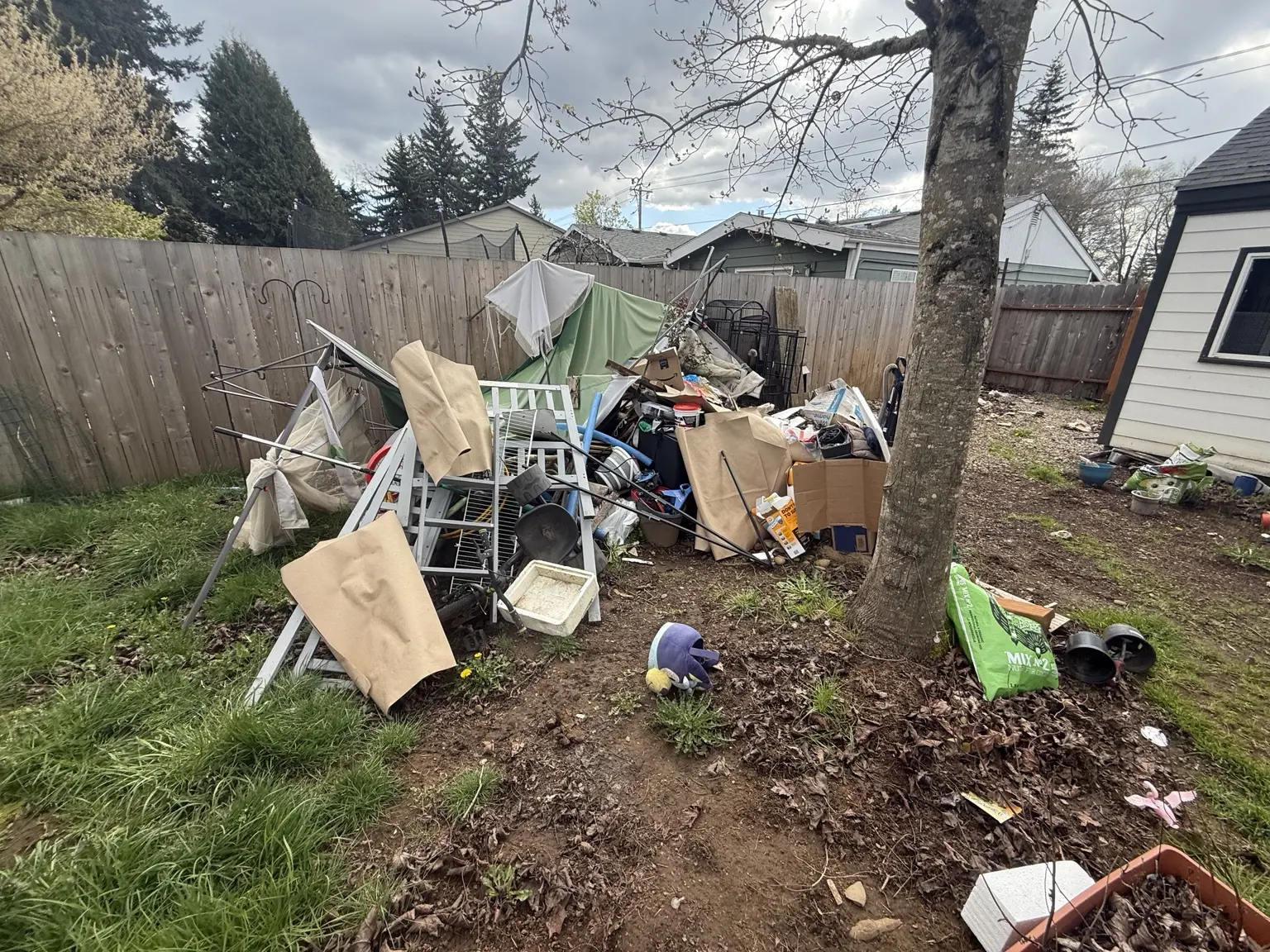
Count the empty containers and describe their materials
Group similar pots and list the larger planters individually. Identify plastic, wood, ceramic, metal or concrete when known, and give approximate dimensions for bulky pieces. Include saucers, detached stands and broken pieces if they should leave too. Mark matching containers you still use so the pickup list does not depend only on where the pots are stacked.
Check empty planters and other accepted items
Tell us if a planter is still filled
An empty pot and a soil-filled container need different weight and handling reviews. Say whether soil, gravel, plants or water remain and which parts you want removed. Soil removal is not included automatically. Leave heavy filled pots in place and ask about preparation before moving or emptying them. Keep pesticides, fertilizers and unknown liquids separate from the ordinary pickup list.
Read the yard-debris preparation guide
Show patios, gates and heavy pieces in place
Photograph each removal area and the route to truck parking, including steps, slopes, gates and soft ground. Tell us about cracked pots or loose sharp pieces rather than hiding them inside another container. A large concrete planter can need more handling than its footprint suggests. The crew reviews carrying needs without requiring you to stage heavy pots at the road.
Plan a rural driveway and carrying route
Combine the approved outdoor items in one estimate
Empty planters can be reviewed alongside unwanted patio furniture or other accepted household contents. Show every included pile so the quote covers the actual volume, weight, carrying and disposal. The onsite estimate is free with no obligation; hauling is paid after price approval. Share your property's full address and any deadline when checking available estimate times.
Book a free planter pickup estimate