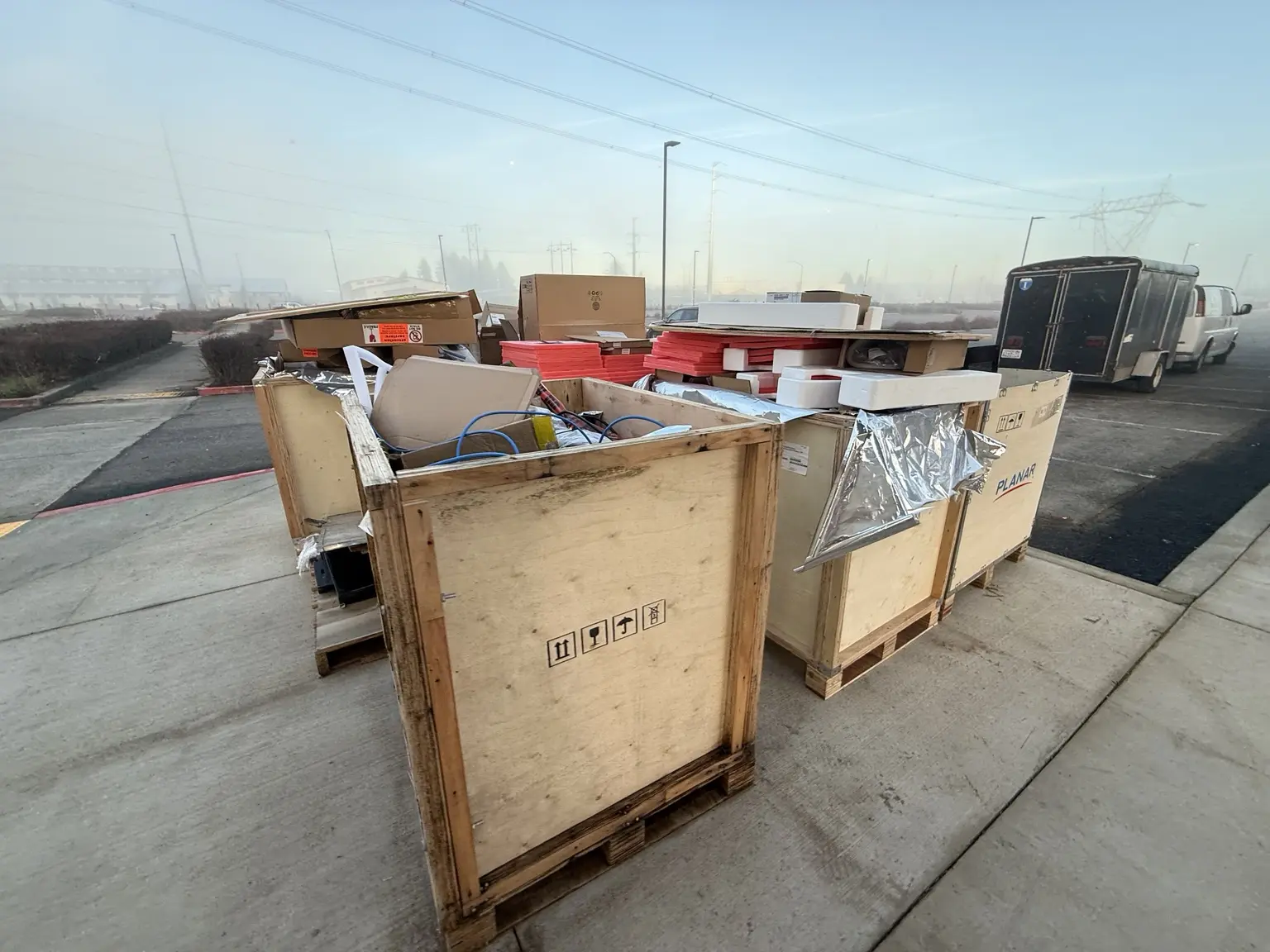
Identify the packaging that is yours to remove
Count wood pallets and shipping crates separately, with approximate dimensions for large pieces. Say whether crates are empty and identify their materials, lids and internal packing. Mark pallets or containers reserved for supplier return and the equipment or goods staying at the property. A loaded pallet is a different request from empty packaging; list its contents for individual review.
See accepted business items
Show damage and unfamiliar material
Photograph protruding fasteners, broken boards, stains, coatings and unknown contents without pulling apart a stack. Describe known material treatment or contamination instead of calling the whole pile clean wood. Chemicals, liquids and unidentified containers are outside an ordinary packaging load. Recycling or reuse depends on the receiving destination; neither scrap value nor free collection is guaranteed.
Review wood and lumber disposal choices
Explain how the load can reach the truck
For a home, show the driveway, storage location and carrying route. At a business, provide dock hours, loading restrictions, stack height and a contact who can approve the work. Disclose palletized loads or pieces requiring equipment. The crew must review loading resources; a pallet pickup does not automatically include forklift service, dismantling a crate or moving the goods you are keeping.
Plan warehouse packaging and loading access
A few delivery leftovers or a commercial project
A small household pile can start with a free onsite estimate. For multiple stacks, mixed business contents or recurring overflow, send the complete quantities and access details for commercial scope review. The quote covers approved carrying, loading, hauling and disposal, with weight and special handling considered. Approve the full price before work; larger projects need an agreed removal plan.
Book an estimate for a small household pickup